
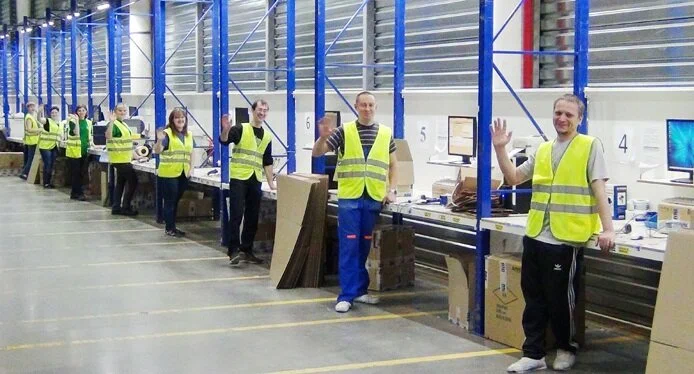
Production hiring is under serious pressure and more businesses are turning to outside support. At the same time, demand for production workers continues to grow across Canada while plants and warehouses struggle to keep their lines fully staffed. As a result, manufacturers are dealing with staffing gaps across shifts.
On top of that, labour shortages worsen each year and turnover makes the problem worse. As a result, many manufacturers and production facilities now look outside their HR teams to see whether professional production staffing services can solve what in-house hiring cannot.
In this blog, you’ll see what’s causing the shift, why outsourced recruitment works, and the specific gains it brings to Canadian manufacturers, food processors and consumer goods producers.
Why Production Recruitment Has Become More Challenging
Production recruitment has become difficult because the labour pool keeps decreasing, skilled workers retire faster than replacements arrive and competing employers raise wages aggressively. Beyond this pressure, Statistics Canada also found that manufacturing businesses were among the sectors most likely to expect recruiting skilled employees to be an obstacle.
Manufacturers also deal with high turnover, frequent no-shows and tighter compliance demands. As a result, sourcing reliable candidates through generic job boards rarely works anymore which is why many businesses now rely on specialized production staffing services to fill critical roles before delays multiply.
What Does Outsourcing Production Recruitment Mean?
Outsourcing production recruitment means handing your hiring work to an external agency that sources, screens and places employees on your behalf.
From the first sourcing call through onboarding, a production staffing agency handles candidate searches, background checks, skills tests and paperwork. You share the role requirements and the agency takes care of everything end-to-end. Moreover, most agencies maintain pre-vetted talent pools so they fill positions far faster than internal recruiters working from scratch.
6 Benefits of Outsourcing Production Recruitment in Canada
Outsourcing production recruitment brings real, measurable gains for Canadian manufacturers and processors. From speed to candidate quality, the advantages add up fast. Here are 6 biggest benefits that show up once a professional agency takes over your hiring pipeline:
1. Access to a larger pool of qualified production workers
Outsourcing connects your business to talent networks you cannot build on your own. After all, staffing agencies spend years gathering candidates’ contact information across cities and skill levels. Some of the 4 advantages include:
- Pre-screened candidates ready for immediate placement
- Workers across multiple shifts, languages and skill tiers
- Coverage across BC, Toronto, and surrounding regions
- Specialized profiles like machine operators and quality inspectors
2. Reduced time-to-hire for critical production roles
Production staffing services reduce your time-to-hire because agencies already maintain pre-vetted talent ready the moment you raise a request. In fact, roles that used to take weeks now close within days – often within 48 hours for entry-level positions. Here are four ways agencies speed up hiring:
- Faster sourcing through existing candidate databases
- Workers ready for placement within the same week
- No internal job posting or interview scheduling delays
- Immediate coverage during peak production season
3. Improved hiring quality through specialized screening
Specialized recruiters assess candidates against production-specific requirements like physical stamina, machine handling and shift adaptability, thereby sharply improving placement quality. The screening covers 4 stages:
- Skills tests for machine operation and assembly line work
- Reference checks across previous production roles
- Cultural fit assessments for your specific work environment
- Verification of compliance and safety training records
4. Greater workforce flexibility for manufacturers
Manufacturers face seasonal demand shifts, sudden production surges and project-based labour needs every quarter. Therefore, outsourced production staffing services give you the flexibility to expand – or shrink your workforce without HR overhead. In many cases, this happens within a single day. That flexibility shows up in 4 ways:
- Short-term contracts for peak season coverage
- Long-term placements for ongoing production lines
- Quick replacement of no-shows or last-minute drop-outs
- Extra capacity without adding permanent payroll
5. Lower recruitment and administrative burdens
In-house recruiting takes hours of HR time on sourcing calls, screening rounds, paperwork and onboarding logistics. A staffing partner handles all that work, freeing your team to focus on strategic responsibilities. Here are 4 tasks your HR team no longer has to handle:
- Zero hours spent on job boards or outreach platforms
- No interview scheduling for high-volume hiring rounds
- Payroll, contracts, and compliance handled externally
- Onboarding logistics managed entirely by the agency
6. Reduced hiring risks and workforce disruptions
When a worker fails to show up or leaves early, production lines stall and output drops. To prevent this, outsourced production staffing services include backup talent pools, replacement guarantees and turnover safeguards that protect your operations. The risk drops in 4 places:
- Replacement workers available within hours
- Backup pools for high-turnover roles
- Lower legal exposure on misclassification
- Less training waste from poor-fit hires
5 Industries That Benefit the Most From Outsourcing Production Recruitment
Some industries benefit the most from outsourced production staffing services because their cycles, compliance pressures and turnover rates demand specialized hiring expertise. Here are 5 industries:
- Manufacturing facilities with steady assembly line and machine operation demand across BC and Ontario plants
- Food and beverage production where hygiene standards, packaging deadlines and shift work shape staffing
- Packaging and distribution operations that frequently hire during holiday and retail peak seasons
- Industrial production environments handling fabrication, finishing and heavy materials
- Consumer goods manufacturing across cosmetics, household items and similar product lines
Signs It May Be Time to Outsource Production Recruitment
Some patterns make outsourcing the obvious next move. And once in-house hiring repeatedly fails to keep production lines fully staffed, an external partner becomes the smarter call. Here are 5 signs:
- Frequent hiring needs: Your production team keeps requesting new workers month after month.
- High employee turnover: Staff leave faster than you can train replacements.
- Difficulty finding qualified workers: Job postings draw few suitable candidates – even after weeks online.
- Production delays due to staffing shortages: Vacant positions slow assembly lines and cause output misses.
- HR teams stretched thin: Internal recruiters have no capacity left for strategic hires because routine volume fills their day.
How 3K Personnel Helps Businesses Solve Production Staffing Challenges
Outsourcing production recruitment reduces time-to-hire, sharpens candidate quality and reduces the daily hiring workload on your HR team. As a result, Canadian manufacturers, food processors and consumer goods producers all see measurable improvements when they partner with specialists rather than handling hiring alone.
To support these outcomes, 3K Personnel manages ongoing post-placement support that makes production hiring work properly. Contact us today to strengthen your workforce and prevent production delays caused by staffing gaps.
Frequently Asked Questions (FAQs)
Q1. Why has recruitment become more difficult?
Labour pools have grown smaller, wages keep rising and turnover has increased steadily. In turn, skilled workers retire faster than younger candidates replace them leaving manufacturers competing for the same shrinking pool of talent.
Q2. Is outsourcing recruitment a good or bad thing?
It works well for production-heavy businesses with shifting labour requirements. However, companies requiring stable, low-volume hiring may not benefit as much – so the right call depends on your volume and turnover rates.
Q3. How to overcome production staffing challenges?
Partner with an agency that maintains pre-vetted talent pools, screens against production-specific criteria and offers fast replacements when employees resign unexpectedly.
Q4. What factors should be considered when making staffing decisions?
Volume of hires, skill requirements, shift coverage, turnover rates, compliance demands, regional labour supply and required time-to-fill for open positions.
